
Microsoft Adds Fuel to the Fire as the RAM Crisis Reaches Windows
The AI boom has turned memory from a relatively inexpensive PC component into a strategic resource. The pressure is now reaching Windows itself, with Microsoft working to reduce Windows 11's memory footprint and improve the experience on machines equipped with only 8GB of RAM.
Key takeaways
- AI infrastructure and data-center expansion have intensified pressure on global memory supplies.
- Microsoft is working to reduce Windows 11's memory footprint, particularly on 8GB PCs.
- Windows 11 officially still requires a minimum of 4GB of RAM.
- Higher memory costs can make it harder for PC manufacturers to increase RAM in budget systems.
- Users can reduce memory pressure by auditing startup software, browser tabs and background applications.
Windows 11 RAM capacity in practice
| Memory | Position | Typical use |
|---|---|---|
| 4GB | Official minimum | Very basic use with little headroom |
| 8GB | Entry level | Web, office work, media and light multitasking |
| 16GB | Comfortable mainstream choice | General productivity, gaming and heavier multitasking |
| 32GB+ | Power-user territory | Demanding games, content creation, virtual machines and professional workloads |
Why the memory crisis suddenly matters to Windows
RAM is becoming a valuable resource again
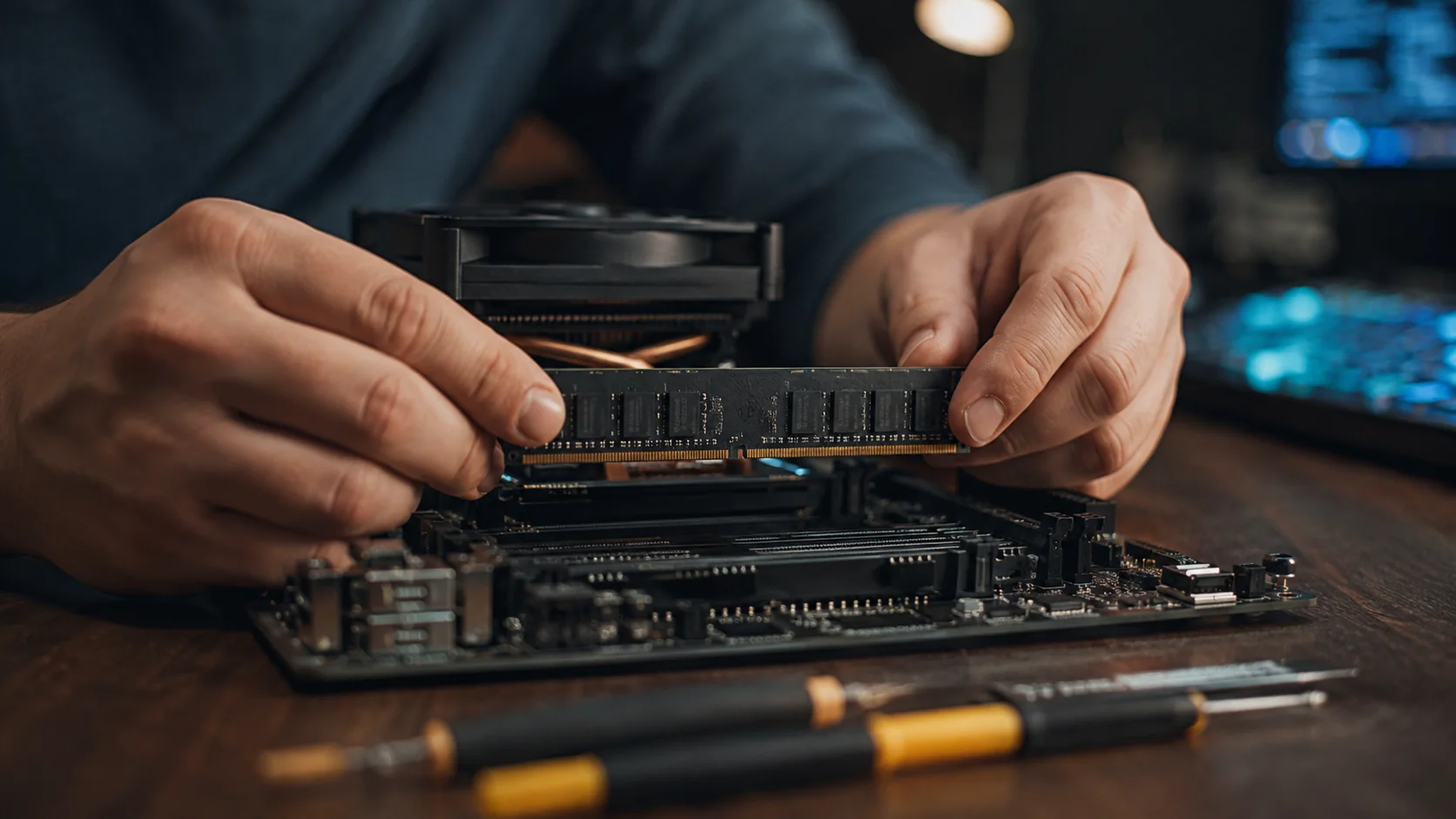
For years, adding more memory was one of the easiest ways for PC manufacturers to improve the user experience. DRAM capacity increased while cost per gigabyte generally moved downward, allowing mainstream laptops to progress from 8GB toward 16GB configurations. The AI infrastructure boom has disrupted that comfortable trend. Data centers require extraordinary amounts of memory, while suppliers have strong incentives to prioritize server and AI-related products.
TrendForce warned in early 2026 of serious PC DRAM supply pressure and exceptionally strong contract-price increases. That matters far beyond enthusiasts building desktop PCs. When memory becomes substantially more expensive, manufacturers of affordable notebooks cannot simply add another 8GB without affecting their bill of materials. Software efficiency therefore becomes important again, and Windows is the largest common denominator across hundreds of millions of PCs.
Microsoft wants Windows 11 to behave better with 8GB
Optimization instead of assuming more hardware
In August 2026, Microsoft executives discussed efforts to reduce the memory footprint of Windows 11, with particular attention paid to systems containing 8GB of RAM. The work spans more than a single service or application. Microsoft is examining memory consumption across the operating-system stack, including the interface, applications, drivers and lower-level components, while also looking at how software is preloaded and retained in memory.
The timing is significant. Sixteen gigabytes had been steadily becoming the comfortable mainstream target, while 32GB configurations were increasingly common in gaming and performance PCs. Expensive memory could keep 8GB machines in the entry-level market for longer than software developers expected. Making Windows more disciplined with memory is therefore valuable not only for existing PCs but also for the next generation of inexpensive notebooks.
- reduce unnecessary operating-system memory consumption
- improve behavior when available memory becomes limited
- manage background and preloaded applications more intelligently
- preserve responsiveness on 8GB PCs
The 4GB requirement is a floor, not a buying recommendation
Meeting the specification does not guarantee comfortable multitasking
Microsoft continues to list 4GB of RAM as the minimum requirement for Windows 11. That figure should not be confused with an ideal configuration. Windows has to share available memory with browsers, communication software, security tools, cloud synchronization services, drivers and everything else the user launches.
When physical memory becomes scarce, Windows can move less immediately needed data to virtual memory on the storage device. A modern SSD makes this process far less painful than it once was, but storage is still not a replacement for RAM. Heavy memory pressure can result in delayed application switching, browser tabs being reloaded and short periods of reduced responsiveness. Eight gigabytes should therefore be viewed as an entry-level capacity today, while 16GB offers a healthier margin for general-purpose PCs. Gaming, content creation, development and virtual machines can justify 32GB or more.
Microsoft sits on both sides of the memory equation
The AI boom creates an uncomfortable industry paradox
There is an obvious irony here. Microsoft is one of the world's major cloud and AI infrastructure investors. Hyperscale operators require huge quantities of memory for servers and AI accelerators, and their demand is part of the broader force reshaping the semiconductor market. At the other end of the chain, Windows needs to remain responsive on consumer PCs whose manufacturers now have to deal with more expensive memory.
That does not mean Microsoft single-handedly caused the RAM crisis. The imbalance is the product of industry-wide AI investment, data-center expansion, memory manufacturers' capacity decisions and the semiconductor industry's familiar supply-and-demand cycle. Microsoft simply illustrates the contradiction particularly well: technology companies are building ever larger AI systems while simultaneously trying to make consumer software use fewer resources because hardware can no longer be treated as endlessly cheap.
What to do when Windows is running out of memory
Diagnose the workload before buying an upgrade
Start with Task Manager by pressing Ctrl+Shift+Esc, open the Processes view and sort applications by memory consumption. A process whose usage grows continuously or remains unexpectedly high may indicate a problematic application, extension or memory leak. Restart and update the software, then check whether the behavior returns. The Startup apps section is also worth reviewing because many utilities do not need to launch every time you sign in.
Browsers deserve particular attention because dozens of complex tabs and extensions can consume several gigabytes. Avoid random 'RAM cleaner' utilities: Windows deliberately uses otherwise idle memory for caching, and high utilization alone is not proof that something is wrong. If your normal workload repeatedly exhausts physical memory and your computer supports upgrades, adding RAM remains the most effective long-term fix.
- Sort processes by memory usage in Task Manager.
- Disable unnecessary startup applications.
- Audit heavy browser tabs and extensions.
- Update applications showing abnormal memory growth.
- Do not disable the page file simply to save disk space.
- Upgrade physical RAM if your normal workload consistently reaches the limit.
The memory crunch is no longer an issue confined to component suppliers and PC builders. If RAM remains expensive, the consequences affect laptop design, entry-level specifications and eventually the operating system itself. Microsoft's effort to slim down Windows 11 is therefore welcome regardless of market conditions. Efficient software should not depend on permanently falling hardware prices. For buyers, however, the lesson remains simple: Microsoft's official minimum is not the same thing as a sensible specification for a new PC.
FAQ
How much RAM does Windows 11 officially require?
Microsoft lists 4GB as the minimum system requirement. It is an installation baseline rather than a recommendation for comfortable everyday multitasking.
Is 8GB of RAM enough for Windows 11?
It can be enough for web browsing, office applications and basic everyday use, but heavy browser workloads, games and multiple applications can expose the limitation quickly.
Has Microsoft increased Windows 11's minimum RAM requirement?
No. The official minimum remains 4GB. Microsoft's current optimization work is about reducing memory consumption and improving performance, including on common 8GB systems.
Why does AI affect consumer RAM prices?
AI servers and accelerators require enormous memory capacity and bandwidth. Rapid data-center expansion therefore increases demand across the memory industry and influences how manufacturers allocate production.
ACC64 editorial article prepared from the cited materials and approved before publication.